
Terrestrial base stations cost too much
In low-density or difficult terrain, conventional terrestrial networks often require high capital outlay for limited reach.
 Technologies
SatCoverage brings together GEO, MEO and LEO satellite capacity, backhaul, gateways, terminals and project capital for telecom operators. For projects that meet our assessment criteria, we can invest or co-invest. By combining lower-cost equipment supply with flexible commercial structures, we help operators extend coverage, acquire new users and build sustainable revenue.
Urban centres in many markets are already well connected. Yet substantial demand remains across city fringes, rural communities, mountains, deserts, islands, border regions and other remote areas.
In low-density or difficult terrain, conventional terrestrial networks often require high capital outlay for limited reach.
Backhaul constraints prevent proven demand from becoming an operational network quickly.
Population density, customer distribution and affordability can make the returns from a conventional site unworkable.
Customer acquisition, terminal subsidies and network investment do not occur on the same timeline, which can extend the payback period.
Terminal pricing and subsidy requirements directly affect how quickly new customers can be connected.
A licence, spectrum and customer demand do not automatically provide the capital needed to launch a new coverage market.
Unless tariffs, terminal subsidies, operating costs and customer growth fit into a viable model before construction, the project will struggle to sustain itself.
Each market requires the right combination of satellite capacity, terrestrial network, terminals and commercial model for its population density, geography and use case.
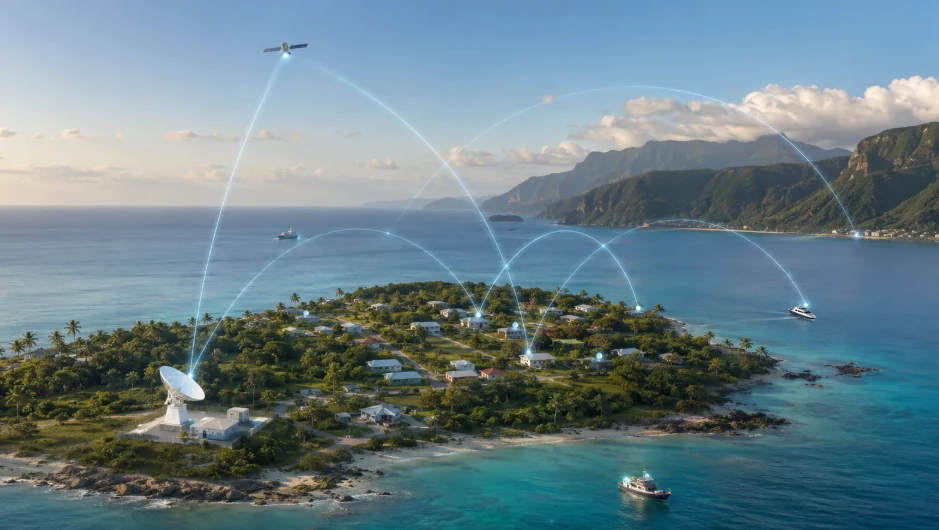
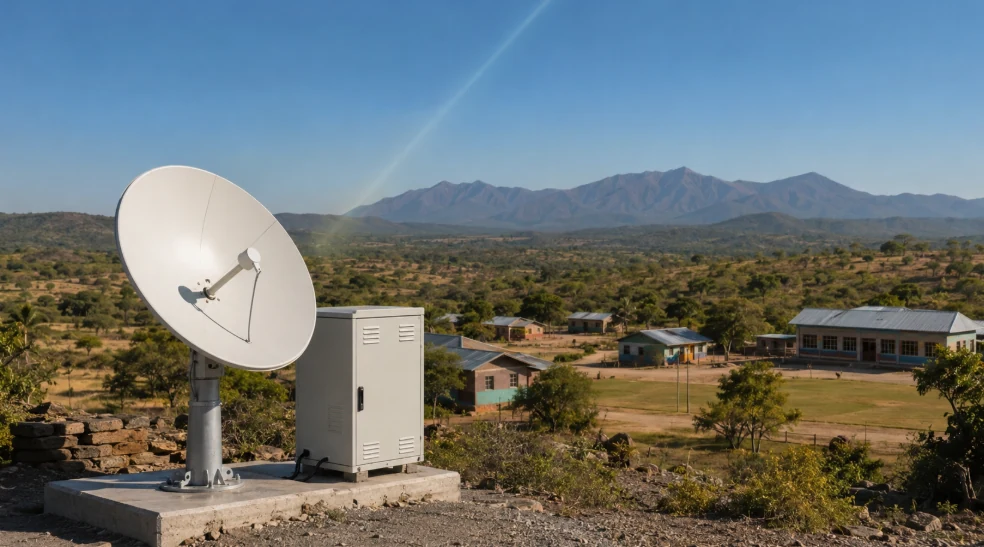

Reach new mobile, home broadband, enterprise and industrial customers while improving the use of existing licences and spectrum.
Support rural mobile service, home broadband, school and healthcare access, digital agriculture, universal service and mobile finance.
Serve remote communities, mining and energy sites, border security, road corridors, emergency response and disaster communications.
Serve island communities, maritime transport, port logistics, fisheries, offshore energy facilities and emergency-response systems.
SatCoverage selects the right GEO, MEO or LEO resources for the operator's market, coverage footprint, customer distribution, spectrum, capacity, latency and affordability requirements. We then design the satellite backhaul and NTN integration with the existing 4G or 5G network.
Match satellite and terrestrial resources to the project's coverage conditions, latency targets, capacity needs and existing network.
Broad geographic reach, stable capacity and mature service models.
A balanced combination of footprint, network capacity and latency.
Lower latency and flexible connectivity for remote locations.
Integrate satellite links and NTN capabilities with the operator's existing 4G or 5G network.
Beyond connectivity, we align equipment, commercial structure, capital and delivery so the coverage requirement can become an operating project.
Source satellite terminals, base stations, core-network and transmission equipment through lower-cost supply chains.
Build a sustainable revenue model around local tariffs, customer affordability and terminal subsidies.
Connect the project with funds, banks, export credit, strategic capital and co-investment partners.
Coordinate engineering, systems integration, network operations and local execution resources.
Satellite connectivity + terrestrial network + terminals + capital + operations: a path from “coverage is not viable” to a network that can be built, operated and sustained profitably.
SatCoverage combines core technology, engineering expertise and supply-chain partners to support satellite connectivity, integrated networks, lower-cost terminals and telecom equipment for operator projects.
You can contact us at any stage—from coverage planning and technical assessment to equipment procurement, capital raising or commercial-model design.
Use satellite connectivity where terrestrial expansion is not economical and integrate it with the existing 4G or 5G network.
Bring terminal subsidies, network equipment and supply-chain costs into one plan to lower the barrier to customer acquisition and network expansion.
Structure the coverage requirement, equipment investment, customer growth and long-term revenue into a clearer, financeable project.
Develop a sustainable coverage and operating model for schools, healthcare, communities, public safety and government services.
Use the continuity of satellite coverage for offshore, mobile, emergency and industry-specific private-network use cases.
Part of the GTIIP Global Network, SatCoverage brings satellite connectivity, lower-cost equipment, project capital and delivery support into one framework for telecom operators. We do not begin with a satellite link alone. Before a project starts, we assess coverage, customers, tariffs, terminal subsidies, network costs, operating cash flow and capital structure together to determine whether the project can be built, operated and sustained over the long term.
Turn unconnected populations into customers, communications demand into revenue, and network deployment into a sustainable infrastructure asset.
Some operators already have licences, spectrum, brand, distribution, customer demand and government support, yet still lack capital for network deployment and customer growth. SatCoverage helps structure a commercially assessed coverage plan into a clearer, more financeable project.
Assess the target area, population and customer distribution, existing spectrum, network conditions, and the combination of satellite and terrestrial resources.
Model terminal subsidies, network costs, local tariffs, customer growth and operating cash flow.
Bring in suitable capital and industry resources while aligning deployment, customer growth, long-term operations and the capital-recovery path.
From the initial requirement and coverage analysis through satellite network design, terminals, costs, revenue, telecom network financing, deployment and customer growth—the goal is sustainable operations and long-term cash flow.
Starting with the operator's requirement, align technology, terminals, costs, revenue and capital on one path to delivery.
Help operators lower the barrier to deployment, extend coverage, acquire new customers and build sustainable communications infrastructure assets.
Telecom operators, public authorities, satellite providers, technology and equipment companies, investors and local partners are all welcome to submit a requirement or partnership proposal.